
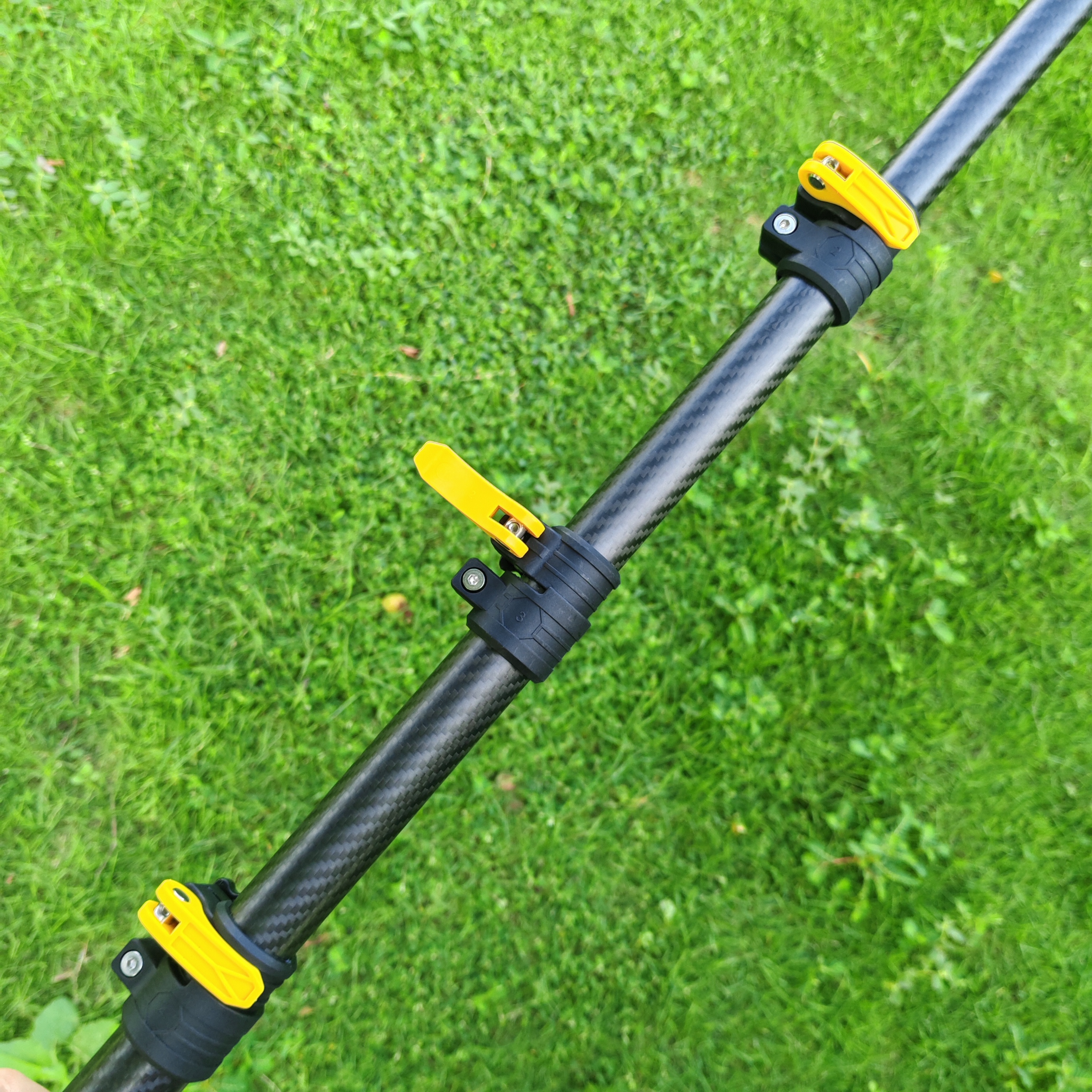
Carbon fiber extension poles have revolutionized residential and commercial high-reach jobs—from window cleaning and roof inspections to tree trimming. However, as trade professionals and facility managers transition from aluminum to advanced composites, one critical safety question frequently arises: Is carbon fiber electrically conductive?
Yes, carbon fiber is highly electrically conductive. Because carbon fiber consists of tightly bonded crystalline carbon atoms organized in long parallel chains, it transfers electrical current almost as efficiently as metal conductors.
Using a carbon fiber telescoping pole near overhead utility lines or electrical service drops poses a severe electrocution hazard if proper safety boundaries are ignored.
1. The Physics: Why Carbon Fiber Conducts Electricity
To understand the electrical hazards, you must look at the atomic structure of composite materials:
Microscopic Structure: Carbon fibers are manufactured by pyrolyzing precursor polymers (such as Polyacrylonitrile, or PAN) at extreme temperatures, leaving behind pure carbon chains.
Electron Mobility: Free electrons move easily along the longitudinal axis of these carbon filaments. Even when encapsulated in non-conductive epoxy resins, the dense weave of carbon fibers creates continuous conductive pathways throughout the entire pole wall.
Moisture Amplification: When operating water-fed cleaning systems, dirty water inside or on the surface of the pole acts as an additional liquid conductor, drastically increasing current transfer speed upon arc contact.
2. OSHA Safety Rules: Working Near Overhead Power Lines
The Occupational Safety and Health Administration (OSHA) enforces strict standards regarding portable high-reach equipment near energized electrical lines (29 CFR 1910.333 and 1926.1408).
The Minimum Approach Distance (MAD)
Always maintain a minimum clearance of 10 feet (3 meters) from overhead power lines carrying up to 50kV. For higher voltages, add 4 inches of clearance for every 10kV over 50kV.
Critical Operational Precautions:
-
Visual Site Inspection: Always scan 360 degrees overhead for utility lines, transformer drops, and service lines before extending any mast.
-
Account for Pole Collapse or Fall Radius: Assume the pole could fully collapse or fall. The distance between your position and the power line must exceed the total extended length of your pole plus 10 feet.
-
Never Rely on Resin Coatings: Epoxy resin can wear down, scratch, or micro-crack during routine use, exposing raw conductive carbon strands underneath. Never assume a glossy finish acts as an electrical insulator.
3. Product Selection & Safe Application Scenarios
Understanding composite conductivity allows you to choose the right tool for specific working environments:
A. Carbon Fiber Extension Poles (High-Rigidity Outdoor Applications)
When working clear of electrical hazards (such as residential facades, open rooftops, and solar installations), carbon fiber delivers unmatchable rigidity and weight reduction. For instance, the 18 FT Carbon Fiber Telescopic Extension Pole weighs only 2.56 lbs while reaching up to 24.5 feet. Its high modulus eliminates flexing, making overhead work safer and less exhausting—provided it is operated in power-free zones.
-(2).jpg?w=1600&h=1600)
B. Water-Fed Cleaning Systems
For high-reach solar array maintenance and window washing clear of power drops, systems like the 30 FT Reach Carbon Fiber Water Fed Cleaning Kit provide unmatched stability and reach. However, operators must always verify that water spray routes do not pass near outdoor electric meters or overhead drop cables.
.jpg?w=1600&h=1600)
C. Fiberglass / Composite Hybrids (When Electrical Isolation is Required)
If you must work within close proximity to utility lines or internal electrical conduit, 100% Fiberglass (Glass Fiber) poles are required. Glass fibers are naturally non-conductive insulators, providing the necessary dielectric barrier to protect operators from accidental electrical contact.
4. Operational Safety Checklist
Before raising any composite extension mast on a job site, run through this quick 4-step safety check:
-
Survey Overhead Space: Identify all power lines within a 50-foot radius.
-
Check Weather Conditions: High wind can cause power lines to sway or swing carbon poles into dangerous contact zones. Wet or damp weather increases electrical tracking risks.
-
Inspect Pole Wall Condition: Check for deep gouges or cracked fibers that might expose internal filaments.
-
Use Spotters on Commercial Sites: Assign a ground crew member to monitor overhead clearances continuously while the technician controls the base.
Summary & Equipment Recommendations
Carbon fiber offers unrivaled stiffness-to-weight performance for overhead tasks, but its electrical conductivity requires strict site awareness. Respect OSHA clearance distances and keep all conductive poles away from energized lines.
To explore commercial-grade extension gear, visit the official CarbonFiberEver Extension Poles Collection.