
Finding the right walking cane usually comes down to one fundamental choice: what it’s made of.
While shape, handle shape, and rubber tips all play a role in daily comfort, the base material determines how heavy the cane feels in your hand, how much load it can safely take, and how well it stands up to years of daily use.
Today, three main options dominate the market: traditional wood, standard aluminum, and modern carbon fiber. Each serves a specific purpose, but they differ drastically in performance, comfort, and longevity.
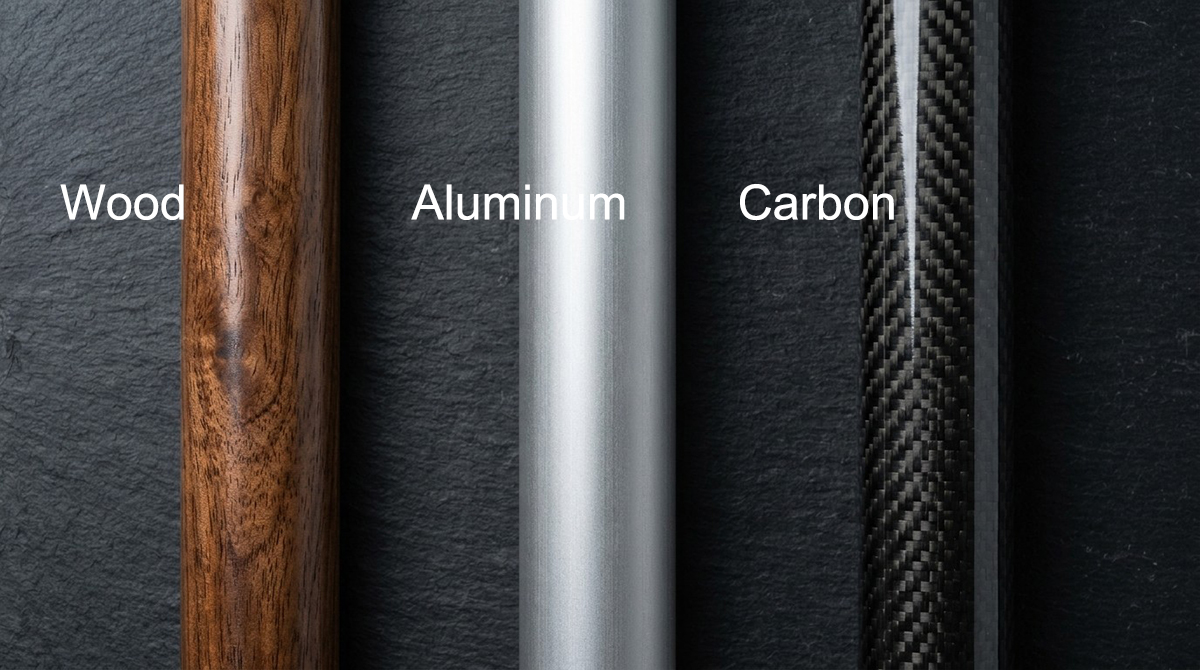
Here is a direct comparison of how these three materials perform in real-world use to help you make an informed decision.
At a Glance: Material Comparison
If you are looking for a quick breakdown, the table below outlines key practical differences across all three materials:
| Feature | Traditional Wood | Standard Aluminum | Advanced Carbon Fiber |
| Weight | Heavy to Medium | Medium | Ultra-Lightweight |
| Weight Capacity | 100 – 250 lbs | 150 – 250 lbs | 200+ lbs |
| Weather Resistance | Poor (Absorbs moisture, cracks) | Moderate (Prone to rust/scratches) | Exceptional (Waterproof, anti-corrosive) |
| Structural Resilience | Can splinter or snap under stress | Dents or bends upon impact | High impact strength (won't dent) |
| Aesthetic Appeal | Classic, artisan | Industrial, utility-focused | Sleek, modern weave finish |
| Long-Term Value | Fair | Good budget option | Highest lifetime value |
1. Traditional Wood Canes: Classic Look with Practical Limits
Wood was the original material for walking sticks, and it remains popular for its classic look and natural feel. Artisans often carve solid oak, walnut, or ash into beautiful, single-piece canes.
[ Traditional Wood ]
+ Classic, hand-crafted feel
- Heavier on joints during long walks
- Vulnerable to rain, humidity & splitting
The Positives:
Natural Aesthetic: Every wood cane carries unique grain patterns, giving it a timeless, hand-crafted appearance.
Solid Feel: Many users enjoy the substantial, grounded weight of a solid piece of timber.
The Trade-offs:
Susceptible to Weather: Wood reacts to environmental changes. Moisture causes it to swell, cold weather can make it brittle, and exposure to rain eventually leads to warping or rot.
Weight Strain: A dense wooden cane adds noticeable weight with every step. Over a long walk, lifting that extra mass puts unnecessary fatigue on your wrist, forearm, and shoulder joints.
Sizing Restrictions: Most wooden canes are fixed-length. To adjust the height, you have to physically saw off the bottom, leaving zero room for error.
2. Aluminum Canes: Functional, Affordable, but Industrial
Aluminum replaced wood in clinical settings decades ago, largely because it introduced quick push-button height adjustments and hollow, lightweight tubes.
[ Standard Aluminum ]
+ Easy height adjustments & low cost
- Dents easily when dropped
- Metallic, institutional look
The Positives:
Budget-Friendly: Aluminum canes are inexpensive to manufacture, making them widely available at local pharmacies.
Easy Adjustability: Telescoping aluminum tubes make it simple to modify height on the fly.
The Trade-offs:
Prone to Denting: Aluminum is a soft metal. Dropping your cane onto concrete or knocking it against a curb can leave permanent dents, which weaken the hollow shaft over time.
Mechanical Noise: Multi-piece aluminum canes often develop a distracting rattle at the adjustment pins after a few months of regular use.
Clinical Look: Most aluminum models carry an institutional, medical-supply appearance that lacks personal style or refinement.
3. Carbon Fiber Canes: Superior Strength, Minimal Weight
Originally developed for aerospace engineering and high-performance racing, carbon fiber consists of tightly woven carbon strands bound in high-strength resin. It has quickly become the benchmark material for premium mobility aids.
[ Advanced Carbon Fiber ]
+ Stronger than steel at a fraction of the weight
- Higher upfront cost than basic drug-store aluminum
+ Extreme durability, shock absorption & sleek finish
The Positives:
Unmatched Weight-to-Strength Ratio: Carbon fiber is roughly five times stronger than steel, yet weighs significantly less than aluminum. This gives you high structural support without dragging around excess bulk.
Reduced Joint Fatigue: Because a carbon fiber cane is extremely lightweight, it drastically lowers the energy required for every swing step. It also absorbs natural micro-vibrations from hard pavement, sparing your wrists and elbows from harsh impacts.
Built for All Conditions: Carbon fiber doesn't rust, absorb water, or crack in extreme cold. Whether you're walking through summer heat or sudden downpours, the material retains its integrity.
Refined Aesthetics: The characteristic woven pattern (such as a classic 3K weave or forged carbon finish) gives the cane a clean, modern look that feels like a premium personal accessory rather than medical equipment.
The Trade-offs:
Initial Investment: Carbon fiber requires specialized manufacturing, which translates to a higher price tag than basic drug-store alternatives. However, its long lifespan usually makes it cheaper over time than replacing damaged wood or dented aluminum.
Key Factors to Help You Decide
Before making a final choice, consider where and how often you intend to use your cane:
1. How Often Will You Use It?
If you rely on your cane every single day, weight is your most important metric. Saving even a few ounces makes a massive difference over thousands of steps, making carbon fiber the clear winner for long-term comfort and joint health.
2. What Is Your Typical Environment?
If you enjoy outdoor walks, hiking trails, or travel, you need a material that copes well with damp grass, travel baggage handling, and unexpected weather. Carbon fiber withstands rough handling without denting or rusting.
3. What Is Your Personal Style Preference?
If you prefer a vintage look for occasional formal gatherings, a well-polished wooden cane serves nicely. If you want a sleek, modern, and confident look for daily errands or travel, carbon fiber strikes the right balance between subtle elegance and high-tech utility.
Conclusion
While wood offers nostalgia and aluminum delivers basic functionality on a budget, carbon fiber delivers the best overall performance for daily life. Its blend of extreme lightness, high load capacity, and weather resistance makes it a lasting investment in your mobility and independence.
Upgrade Your Daily Walk with CarbonFiberEver
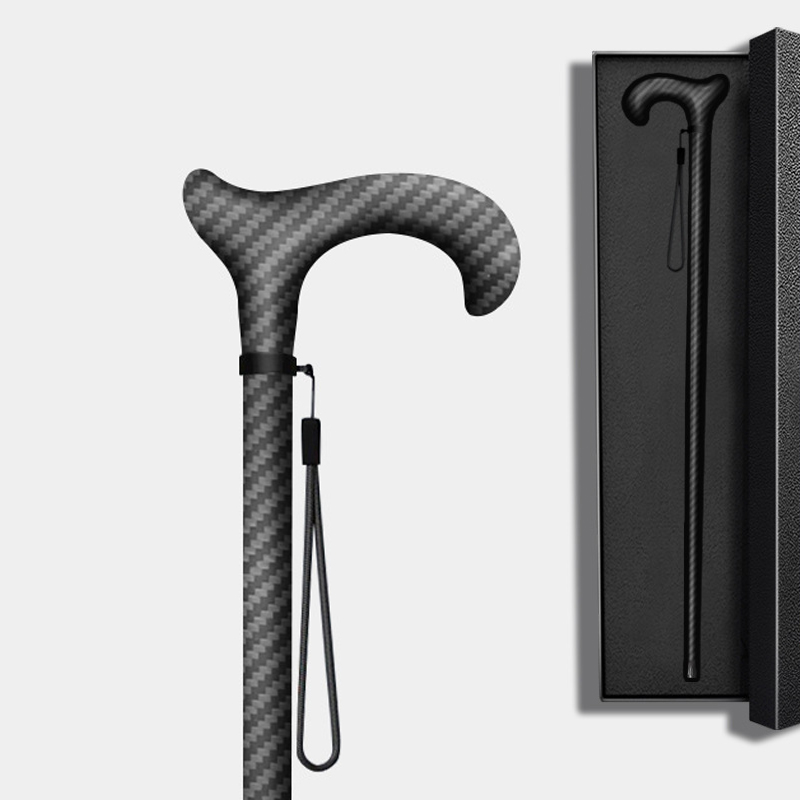
At CarbonFiberEver, we engineer carbon fiber canes specifically for people who refuse to compromise on safety, comfort, or style.
- Ultra-Light Build: Reduces wrist strain so you can stay active longer.
- Rock-Solid Stability: Supports high load capacities with total frame rigidity.
- Timeless Carbon Weave: Designed to look clean, modern, and distinguished anywhere you go.
👉 [Explore the CarbonFiberEver Cane Collection Today] and find the perfect balance of strength and lightness for your daily journey.