
Navigating airport security is stressful enough without wondering if your walking support will be confiscated at the checkpoint. For travelers who rely on a cane for stability—or simply prefer having extra support during long walks across expansive airport terminals—understanding airline and security policies is essential for a smooth journey.
The short answer is yes, you can bring a walking cane on an airplane. However, navigating the screening process, managing in-cabin storage, and choosing a cane that withstands the rigors of travel require a bit of know-how.
TSA Regulations for Walking Canes: What You Need to Know
According to official regulations set by the U.S. Transportation Security Administration (TSA) and international aviation authorities, mobility aids are fully permitted on commercial flights.
Mobility Aids vs. Luggage Limits
A walking cane used as a mobility device is classed as an assistive device. This distinction is crucial: your cane does not count toward your carry-on or personal item allowance. You can bring your standard carry-on bag, a personal item, and your walking cane without incurring extra baggage fees or breaking cabin rules.
The Security Checkpoint Process
When passing through TSA security, your cane must undergo X-ray screening alongside your shoes and bags. Here is how to handle the process effortlessly:
-
Inform the Officer: Before entering the metal detector or body scanner, let the TSA officer know if you cannot walk without your cane.
-
Alternative Screening: If you require physical support while your cane passes through the X-ray machine, officers will provide a temporary wooden cane or conduct a manual inspection so you never have to stand unsupported.
-
Important Distinction: Note that standard mobility walking canes are allowed in the cabin, whereas sharp-tipped hiking or trekking poles are strictly prohibited in carry-on luggage and must be checked.
In-Cabin Storage: Navigating Space Onboard
Once you board the aircraft, storing a walking aid requires careful consideration to keep it safe from damage and out of the way of fellow passengers.
Traditional rigid walking sticks present a challenge onboard. Placed in the overhead bin, they risk being crushed by heavy rolling suitcases. Placed under the seat in front of you, a full-length shaft can slide into the aisle, creating a tripping hazard.
To solve these onboard challenges, modern travelers typically choose between two specialized designs:
One-Piece vs. Folding: Choosing Your Travel Companion
Whether attending a high-profile business conference or heading out on a relaxed holiday, choosing the right shaft construction depends entirely on your travel priorities.
| Feature | Ultralight One-Piece Cane | Folding Carbon Fiber Cane |
| Best For | Formal attire, executive travel, zero-noise steps | Frequent flyers, day trips, compact storage |
| Folded Length | Fixed 37" (Custom available) | 14.57" (37 cm) — Fits inside a tote or backpack |
| Net Weight | Featherlight 110g (0.24 lbs) | Ultra-portable 300g (0.66 lbs) |
| Weight Capacity | 150 kg (330 lbs) | 100 kg (220 lbs) Heavy-Duty |
| Adjustability | Seamless custom height | 5-Level Push-Button (86–96 cm) |
| Storage Solution | Overhead closet or bin | Included Compact Storage Bag |
Spotlight: The Folding Carbon Fiber Travel Cane
For travelers who prioritize space efficiency, the Folding Carbon Fiber Walking Cane with Storage Bag offers a modern alternative to bulky medical aids.
.jpg?w=800&h=800)
Compact Packability
Engineered with a four-section collapsible design, this cane folds down to a compact 14.57 inches (37 cm)—roughly the height of a standard thermal flask. Secured by double-thick elastic nylon cords and a reinforced folding plate, it slips effortlessly into your handbag, tote, or carry-on backpack when you reach your seat, staying completely out of the way during flight.
Heavy-Duty Structural Strength
Compact size does not mean compromised support. Constructed from pure carbon fiber, the shaft offers five times the strength of steel at a fraction of the weight, supporting an impressive 100 kg (220 lbs). It features an internal safety lock to eliminate wobbling, paired with a high-traction spiral tread rubber foot pad for confidence on slick terminal floors.
Tailored Ergonomics
With five push-button height adjustments (ranging from 33.8 to 37.8 inches) and a contoured ergonomic handle, it reduces palm fatigue during long waits in customs and immigration lines.
Why Carbon Fiber Beats Metal and Wood for Frequent Travel
Travel exposes gear to severe wear and tear. Traditional materials often fail under travel stress:
-
Aluminum Canes: Easily bent when struck by luggage, heavy, and prone to metallic clicking sounds at every step.
-
Wooden Canes: Heavy, susceptible to cracking under climate changes, and easily scratched during security checks.
-
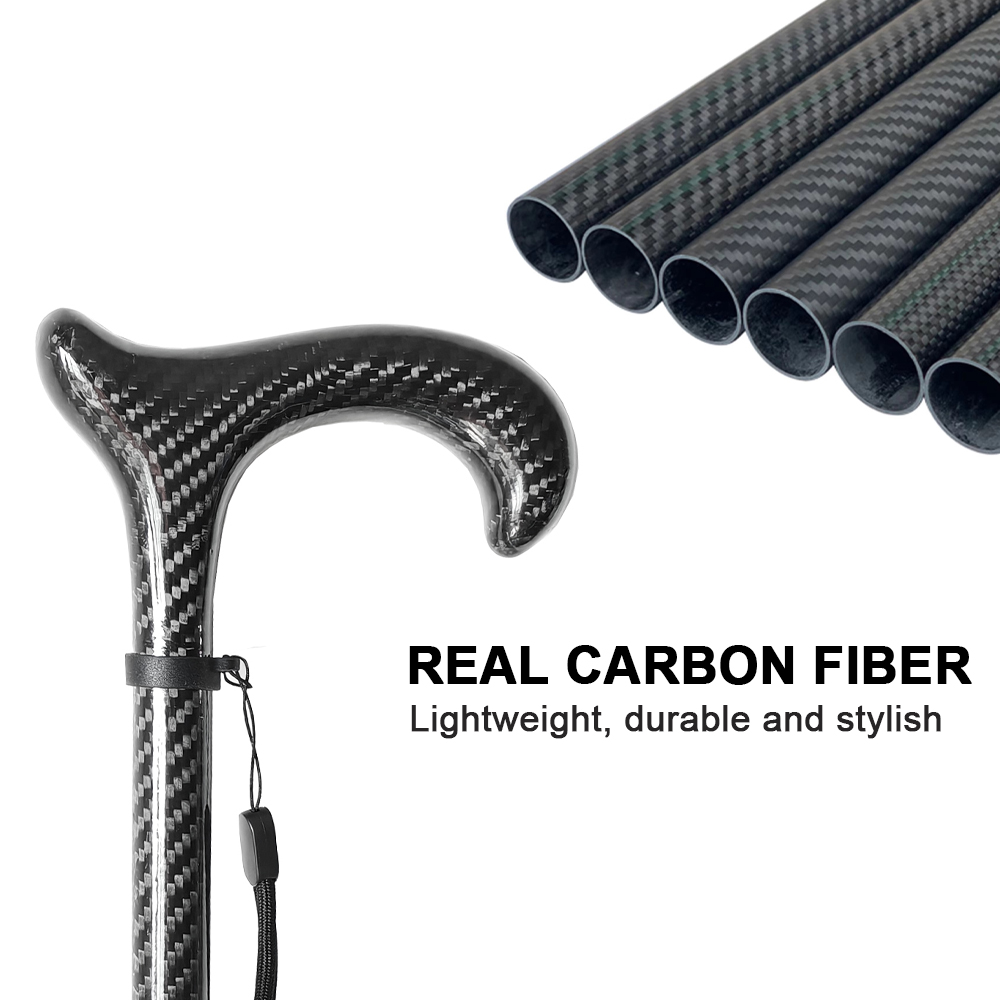
Carbon Fiber Composite: Nearly immune to impact damage, scratch-resistant, non-corrosive, and whisper-quiet on hard marble and carpeted concourses alike.
A genuine carbon fiber shaft absorbs heel-strike vibration, protecting your wrist and shoulder joints over miles of airport walking.
Travel Smart with CarbonFiberEver
A walking cane should empower your journey, not complicate it. Whether you prefer the refined minimalism of an ultralight single-piece shaft or the versatility of a collapsible travel model, upgrading to pure carbon fiber ensures you travel light, look sharp, and walk with total confidence.
Explore our complete carbon fiber canes collection at CarbonFiberEver today to find the perfect blend of structural strength and modern elegance for your next destination.